
Introduction
A basement often starts as the most overlooked space in a home—dark, unfinished, and filled with exposed pipes or wires. Yet with the right basement ceiling ideas, it can become one of the most stylish and functional rooms in the house. Whether you’re creating a cozy family lounge, a home office, or a personal entertainment space, the ceiling design plays a surprisingly important role.
Many homeowners focus on flooring, lighting, and furniture but forget that the ceiling dramatically affects the atmosphere of the room. A thoughtful ceiling design can hide ductwork, improve acoustics, enhance lighting, and give your basement a polished, finished look.
The good news is that you don’t need a huge budget to make a big impact. From rustic wood planks to modern drop ceilings and creative painted designs, there are countless basement ceiling ideas that can transform your space into something truly inviting.
In this guide, we’ll explore practical, stylish, and budget-friendly options to help you design a basement ceiling that feels intentional rather than unfinished.
Why Basement Ceilings Matter in Interior Design
Basements usually have unique challenges compared to other rooms. Low height, exposed utilities, and limited natural light mean the ceiling becomes a major design element.
A well-designed ceiling can:
- Conceal pipes, wires, and ductwork
- Improve sound insulation
- Reflect light and brighten the space
- Add architectural style to a plain room
- Increase property value
Many modern basement ceiling ideas focus on balancing beauty and function. The goal isn’t just to hide structural elements—it’s to make them work as part of the design.
Drywall Ceilings for a Clean, Finished Look
One of the most popular basement ceiling ideas is installing drywall. This creates a smooth, seamless appearance that feels just like the ceiling in any other room of your house.
Drywall ceilings are ideal if you want the basement to feel like a natural extension of the main living space.
Benefits of Drywall Ceilings
- Creates a clean, professional finish
- Improves sound insulation
- Easy to paint or texture
- Matches the rest of your home’s interior
The main downside is accessibility. Once drywall is installed, reaching pipes or wiring becomes more difficult. However, strategic access panels can solve this issue.
Drop Ceilings: Practical and Versatile
Drop ceilings—also known as suspended ceilings—are among the most practical basement ceiling ideas for homes with lots of exposed utilities.
These ceilings consist of lightweight panels placed in a metal grid. The grid hangs slightly below the original ceiling, leaving space for pipes, wires, and ductwork.
Why Homeowners Love Drop Ceilings
- Easy access to plumbing and electrical systems
- Affordable installation
- Available in many styles and textures
- Great for sound absorption
Modern drop ceiling tiles look far more stylish than the old office-style versions many people imagine.
Painted Exposed Ceilings for an Industrial Look
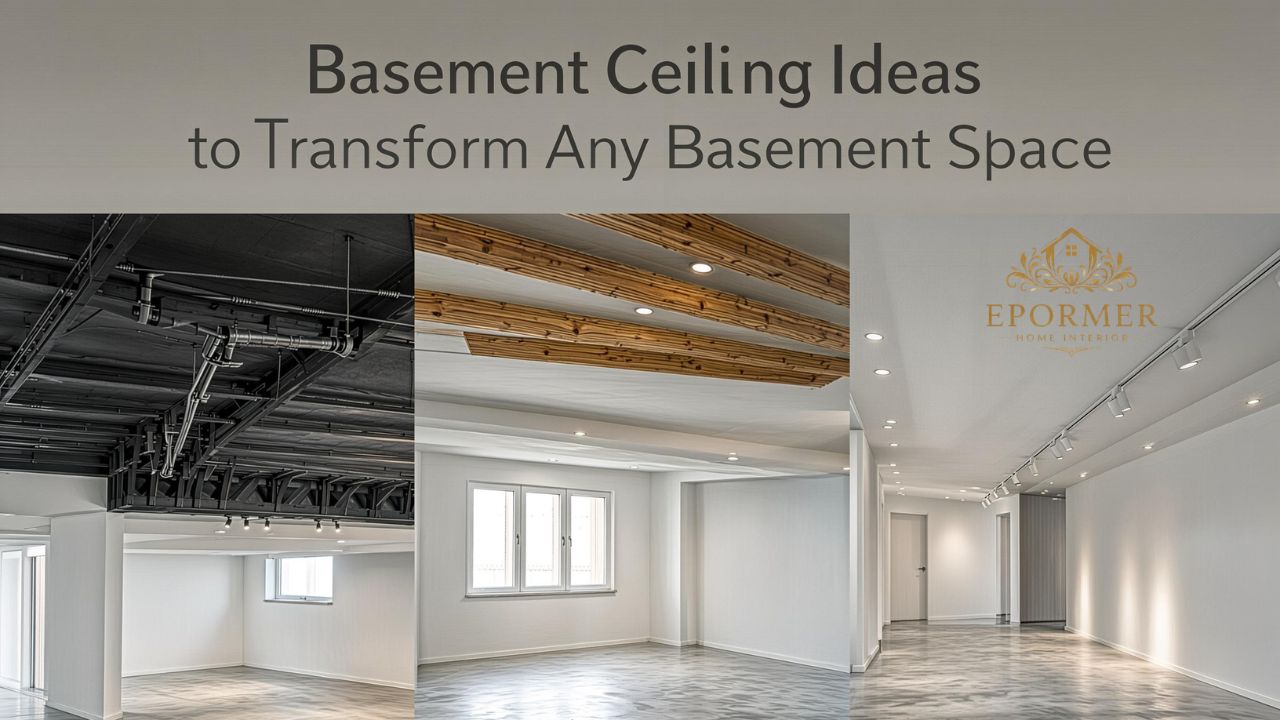
If your basement ceiling is filled with pipes, beams, and ducts, painting everything can create a modern industrial aesthetic.
This approach is one of the simplest basement ceiling ideas, and it’s especially popular in loft-style interiors.
How It Works
Instead of covering pipes and wiring, you paint them all one color—usually black, white, or gray. This creates a cohesive look while maintaining easy access.
Black ceilings can make pipes visually disappear, while white ceilings help reflect light in darker basements.
Wood Plank Ceilings for Warmth and Character
Wood ceilings instantly add warmth and texture. If you want a cozy basement environment, wood planks are among the most attractive basement ceiling ideas.
Wood planks can be installed directly onto ceiling joists or over a lightweight frame.
Popular Wood Ceiling Styles
- Shiplap panels for a farmhouse look
- Tongue-and-groove boards for a classic finish
- Reclaimed wood planks for rustic charm
- Light pine panels for Scandinavian-inspired design
Wood works especially well in basement living rooms, home theaters, and guest spaces.
Beamed Ceilings for Rustic Style
Exposed beams can transform a plain basement into a space full of architectural personality. This style works beautifully in homes with farmhouse, cottage, or traditional interiors.
Decorative beams can be added even if your basement doesn’t originally have them.
Benefits of Beam Ceilings
- Adds depth and visual interest
- Creates a rustic atmosphere
- Helps divide large basement spaces
- Works well with wood or drywall ceilings
Combining beams with other basement ceiling ideas, such as recessed lighting, can produce a dramatic and stylish effect.
Ceiling Tiles for Budget-Friendly Renovations
If you’re renovating on a budget, decorative ceiling tiles are one of the most cost-effective basement ceiling ideas available.
These tiles come in materials like:
- PVC
- Foam
- Mineral fiber
- Metal
Many mimic the appearance of tin ceilings, wood panels, or decorative plaster.
Advantages of Ceiling Tiles
- Quick installation
- Lightweight materials
- Moisture-resistant options available
- Easy replacement if damaged
Fabric or Curtain Ceilings for Creative Spaces
A less conventional but visually striking option is using fabric to cover the ceiling.
This approach is particularly effective in entertainment areas such as:
- Home theaters
- Game rooms
- Teen hangouts
- Creative studios
Soft fabric draping creates a cozy atmosphere and improves sound absorption. Among unique basement ceiling ideas, this is one of the most flexible and inexpensive.
Lighting Integration for Basement Ceilings
Lighting and ceiling design should always work together. Because basements often lack natural light, your ceiling layout needs to support good illumination.
Best Lighting Options for Basement Ceilings
- Recessed lighting for a clean modern look
- Track lighting for flexible direction
- Pendant lights for style and focal points
- LED strip lighting for ambient effects
Combining lighting with creative basement ceiling ideas can make the space feel brighter, taller, and more inviting.
Low Ceiling Basement Solutions
Many basements have limited height, making certain designs impractical. Fortunately, there are several basement ceiling ideas specifically designed for low ceilings.
Best Options for Low Basements
- Painted exposed ceilings
- Thin drywall installation
- Shallow drop ceilings
- Light-colored finishes
Avoid bulky decorative elements that could make the room feel cramped.
Acoustic Ceilings for Quiet Spaces
If your basement is used as a home theater, music room, or office, sound control becomes important.
Acoustic panels or tiles help absorb sound and reduce echoes.
Benefits of Acoustic Ceiling Panels
- Improves sound quality in entertainment rooms
- Reduces noise traveling upstairs
- Enhances privacy
- Adds a modern textured appearance
These panels can be combined with other basement ceiling ideas to balance design and functionality.
Moisture-Resistant Ceiling Materials
Basements can be prone to humidity and moisture, so selecting the right materials is essential.
Best Moisture-Resistant Options
- PVC ceiling tiles
- Vinyl panels
- Mold-resistant drywall
- Metal ceiling panels
These materials protect your ceiling while maintaining the style of your chosen basement ceiling ideas.
DIY Basement Ceiling Projects
For homeowners who enjoy hands-on projects, many ceiling upgrades can be done without professional help.
Simple DIY Ceiling Projects
- Painting exposed ceilings
- Installing peel-and-stick tiles
- Mounting wood plank panels
- Creating decorative beam frames
DIY projects allow you to experiment with creative basement ceiling ideas while staying within your renovation budget.
FAQ
Frequently Asked Questions
What is the cheapest basement ceiling option?
Painting the exposed ceiling is usually the cheapest option. It requires minimal materials and can dramatically improve the appearance of the basement.
What is the most popular basement ceiling design?
Drop ceilings and drywall ceilings remain the most common choices because they provide a clean appearance while covering pipes and wiring.
Can you leave a basement ceiling exposed?
Yes. Many modern interiors use exposed ceilings painted in black or white to create an industrial-style look.
What ceiling works best in a low basement?
Painted exposed ceilings or thin drywall installations work best because they preserve maximum ceiling height.
Are drop ceilings outdated?
Not anymore. Modern drop ceiling panels come in stylish designs that resemble wood, metal, or textured plaster.
How do you hide pipes in a basement ceiling?
You can hide pipes using drywall soffits, drop ceilings, decorative beams, or painted exposed ceilings.
What color is best for basement ceilings?
White reflects light and brightens the space, while black helps conceal pipes and wiring in exposed ceiling designs.
Do basement ceilings increase home value?
Yes. A finished basement ceiling makes the space feel complete and can significantly improve the perceived value of the home.
Conclusion
Designing a basement ceiling may not seem exciting at first, but it can dramatically change how the entire space feels. From sleek drywall finishes to rustic wood planks and modern exposed ceilings, the right approach can turn a dark basement into a warm and welcoming living area.
The best basement ceiling ideas combine style with practicality—hiding structural elements while improving lighting, acoustics, and overall comfort. Whether you prefer a DIY project or a professionally finished ceiling, there are options available for every budget and design preference.
With thoughtful planning and a little creativity, your basement can become one of the most attractive and functional rooms in your home.